North Dakota: Lefse
Soft, tender potato flatbreads made with simple ingredients and cooked in a hot, dry skillet. This small-batch lefse recipe makes just a handful, making it perfect if you want to try homemade lefse without ending up with a huge batch.
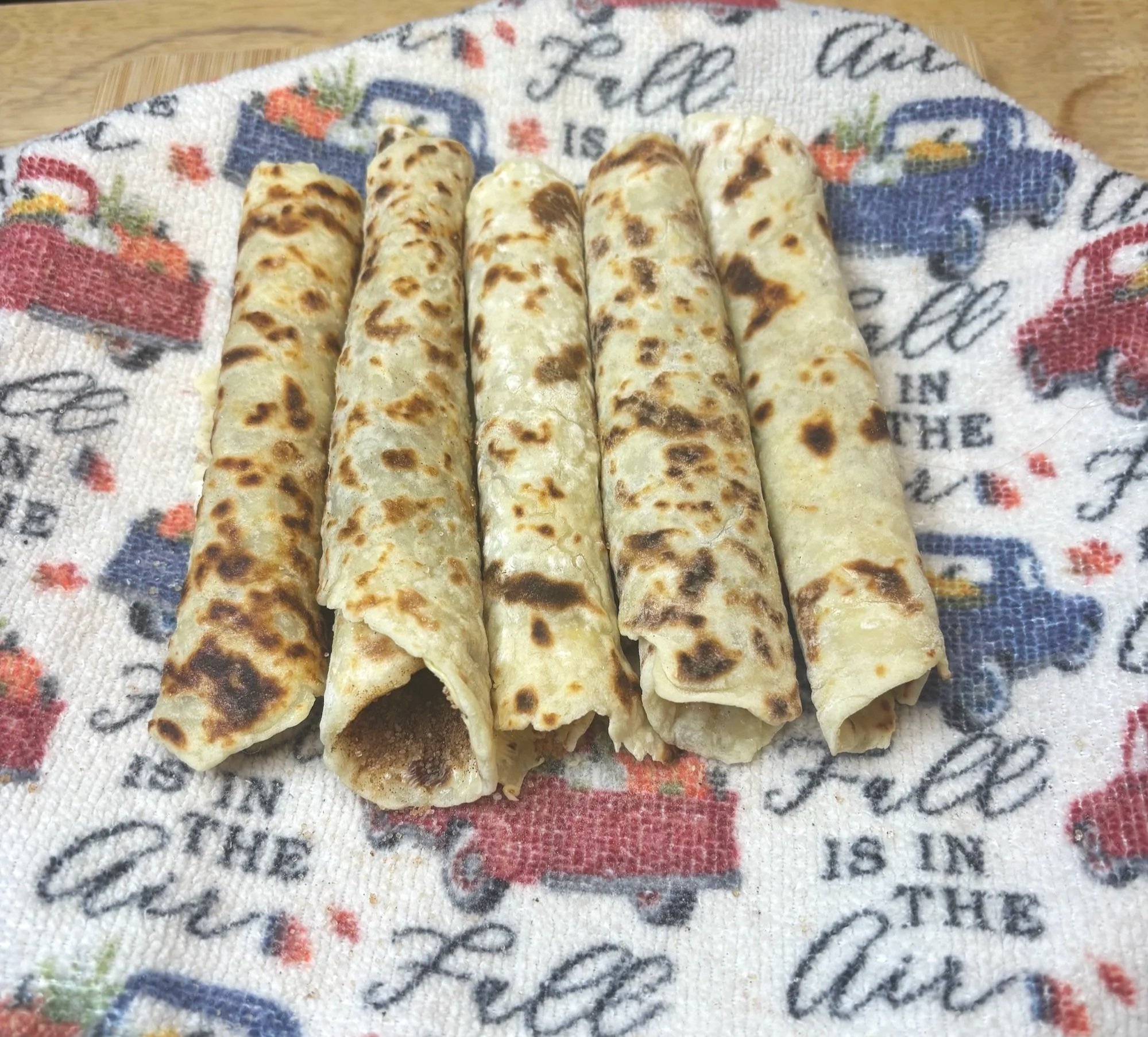
Yield: About 6 small lefse
Ingredients
1 medium peeled Russet potatoes (225 g)
21 g (1 1/2 tablespoons) unsalted butter
15 g (1 tablespoon) 2% milk
1/4 teaspoon salt
60–75 g (about 1/2–2/3 cup) all-purpose flour, plus more for rolling
For Serving
Softened butter
Cinnamon sugar, optional
Instructions
Peel the potatoes and cut them into chunks. Place in a saucepan, cover with water, and boil until completely fork-tender.
Drain the potatoes thoroughly. Return them to the warm pot for 1–2 minutes to allow excess moisture to evaporate.
While still hot, mash the potatoes until as smooth as possible. Add the butter and allow it to melt into the warm potatoes. Gently mix in the milk and salt.
Allow the potato mixture to cool, then cover and refrigerate for at least 1–2 hours, or until completely cold.
Once chilled, gently mix in 60 g of flour. If the dough is too sticky to handle, add additional flour about 5 g at a time. Avoid adding more flour than necessary.
Divide the dough into approximately 35–45 g portions and form each into a ball. Keep the remaining dough refrigerated while you work.
Generously flour a clean work surface and rolling pin. Roll each portion into a thin circle, approximately 7–9 inches wide. Roll as thinly as you comfortably can without tearing the dough.
****I sectioned out each portion with parchment squares. It makes transfer to the pan much easier****
Heat a large dry skillet or griddle over medium to medium-high heat. Do not add butter or oil.
Carefully transfer one lefse to the hot skillet. Cook until bubbles form and brown spots appear on the underside, approximately 30–60 seconds. Flip and cook the second side until lightly spotted. Slightly thicker lefse may need additional cooking time.
Transfer the cooked lefse to a clean kitchen towel and keep covered while you cook the remaining pieces. The trapped steam helps keep the lefse soft and pliable.
Serve warm or at room temperature. For a sweet version, spread with softened butter, sprinkle with cinnamon sugar, and roll up.
Notes
You don't need a traditional lefse rolling pin, pastry cloth, or lefse griddle for this small batch. A regular rolling pin, well-floured work surface, and large skillet work just fine.
Don't worry about achieving paper-thin lefse if the dough begins to tear. It's better to cook a slightly thicker lefse than to add excessive flour or tear the dough trying to make it thinner.
For the softest lefse, keep the cooked pieces covered with a towel until you're ready to serve them.
